What the Machines Couldn't Make
And why running out of us might be the point

"Attention is the rarest and purest form of generosity."
— Simone Weil
I’ve been staring at the news for twenty minutes without reading it.
I can’t locate the feeling I’m supposed to have.
TikTok was banned. Then unbanned this week. War abroad. War inside.
AI companies admitted they’re running out of human writing to feed the machines.
Each headline demands urgency. But urgency doesn’t land the way it used to.
I think a lot of us are here.
In this strange room where the news keeps arriving but the response it expects—outrage, hope, despair, action—feels borrowed. Like wearing someone else’s clothes.
It’s not that we don’t care. It’s that caring has become a performance we’re no longer sure how to give.
My father worked the same job for decades. When he came home, he knew what the day had meant. The work was hard, sometimes brutal, but it had edges. You could hold it.
I don’t know what my work means most days. I move symbols around. The symbols move other symbols. Somewhere down the chain, supposedly, something happens in the physical world.
I depend on people I will never meet. Most of what I consume comes from far away. The food I eat has to travel for many days to reach my table. Most people I work with live in other cities, other countries.
I take it all on faith.
This isn’t a complaint. Most of us live like this now—at a distance from the consequences of our own actions, embedded in systems so complex that cause and effect have become articles of faith rather than things we can see.
"It may be that when we no longer know what to do, we have come to our real work, and when we no longer know which way to go, we have begun our real journey."
— Wendell Berry
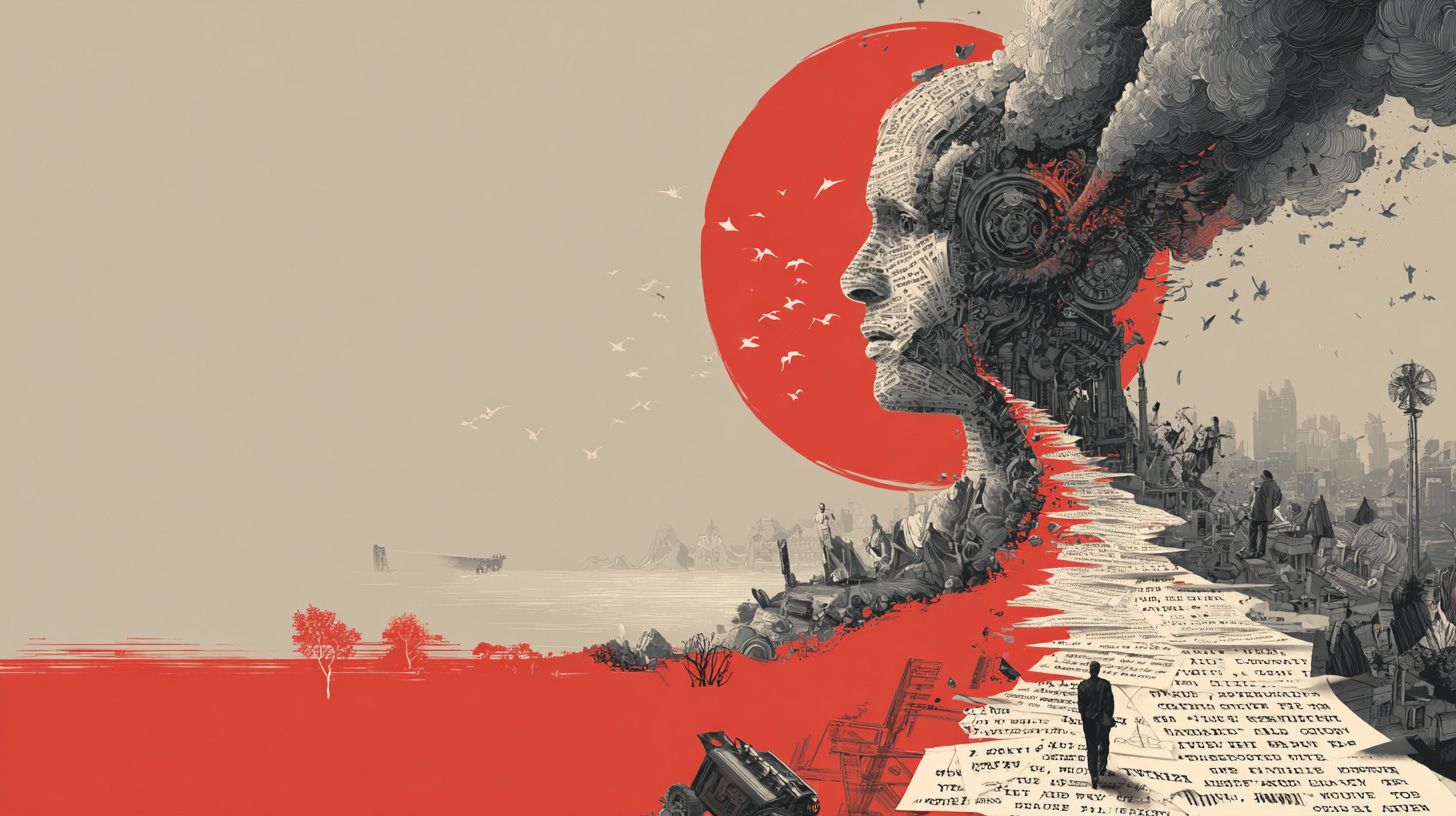
AI companies say they’re running out of training data. The models have consumed most of the human-generated text on the internet, and now they’re training on each other’s outputs. AI consuming AI-produced knowledge. The snake eating its tail.
I find this almost comforting. Not because collapse is good, but because it suggests there’s still something the system can’t manufacture. It needed us. It still needs us. All that human writing—the emails and essays and late-night forum posts, the recipes and eulogies and love letters—it turned out to be a finite resource.
We made something the machines required and couldn’t replicate.
That’s not nothing.
Here’s what I’m learning, slowly:
The system’s incoherence isn’t a bug I need to fix or a puzzle I need to solve. It’s the weather now. TikTok banned and unbanned in the same breath. Policy as performance. Contradictions that don’t even pretend to resolve.
I can’t control the weather. But I can notice what I do when it rains.
Yesterday I spent an hour talking to my cousin about life. He is working on a legal project and has a big deadline this Wednesday. We talked about his work, the data points he is using, military maps, and other details.
None of it mattered in the way the news insists things should matter. No one will write a headline about legal deadlines. But standing there, in actual weather, talking about projects —I could feel my feet on the ground. I knew where I was.
The news wants me to be everywhere at once, feeling everything at the right intensity, responding on cue. My cousin’s project only asked me to be in one place, paying attention to one thing.
That’s the practice now. Not turning away from the collapse, but finding the moments where presence is still possible. The places where cause and effect still make sense. Where you can plant something and watch it grow.
"There is a crack in everything. That's how the light gets in."
— Leonard Cohen
The system is performing its own breakdown. The performances are getting stranger, more frantic, less coherent.
And here we are, in the audience, slowly realizing we don’t have to clap.
We can just sit here. Feel what we actually feel.
Call your cousin. Start a garden. Find people and make something that isn’t content.
The machines are hungry. Let them starve on each other.
We have other things to do.